
Treats can be one of the most useful tools in dog training, but they can also create excitement, jumping, grabbing, and begging when expectations are unclear. Building strong dog treat impulse control teaches your dog that seeing or smelling food does not mean they automatically get access to it.
At Off Leash K9 Training of Providence, RI, I encourage owners to use treats as part of a bigger training system rather than simply handing food over whenever a dog becomes excited. When your dog learns to stay calm around rewards, treats become a way to strengthen communication, focus, and obedience.
Here are five practical ways Providence dog owners can improve dog treat impulse control at home and during everyday outings.
- Ask for Calm Behavior Before Giving the Treat
The first step in dog treat impulse control is simple: calm behavior should make the reward happen.
If your dog jumps, paws at you, barks, or pushes toward your hand, avoid immediately giving them the treat. Instead, wait for a calmer response and ask for a behavior they already understand, such as sit.
You can practice this sequence:
- Hold the treat calmly.
- Ask your dog to sit.
- Wait until all four paws are under control.
- Mark or praise the correct behavior.
- Give the treat.
Over time, your dog begins to understand that patience works better than demanding the reward.
This same principle applies to other parts of obedience training. Our guide to multi-dog success and training is especially useful for households where several dogs become excited when treats come out.
- Build Dog Treat Impulse Control With “Leave It”
“Leave it” is one of my favorite commands for improving dog treat impulse control because it teaches dogs that access to something tempting depends on listening to their owner.
Start with a treat in your closed hand. Let your dog notice it, but do not open your hand while they are pawing, licking, or pushing toward it. The moment your dog backs away or redirects attention toward you, reward that calmer choice with a different treat.
As your dog improves, practice with a treat on the floor while keeping enough control to prevent them from grabbing it.
The American Kennel Club’s guide to teaching “leave it” also emphasizes building the behavior gradually before increasing the difficulty.
The goal is not simply to stop your dog from eating something. You are teaching them to pause, listen, and look to you for direction.
- Stop Using the Treat as a Bribe
One common problem I see is owners showing the treat before every command.
Your dog sees the food, decides whether the reward is valuable enough, and then chooses whether to listen. That is different from reliable obedience.
Strong dog treat impulse control means your dog can follow familiar commands even when the reward is not already visible.
Once your dog understands a behavior, begin changing when treats appear. Ask for the command first, then reward after your dog completes it.
This helps move training from “I listen because I can see food” toward “I listen because I understand what you are asking.”
Our article about the gift of obedience training explains why dependable everyday communication matters beyond individual training exercises.
Regional Dog-Friendly Business Spotlight
This week’s regional spotlight is Power Pup Treats, a Rhode Island-based dog treat bakery.
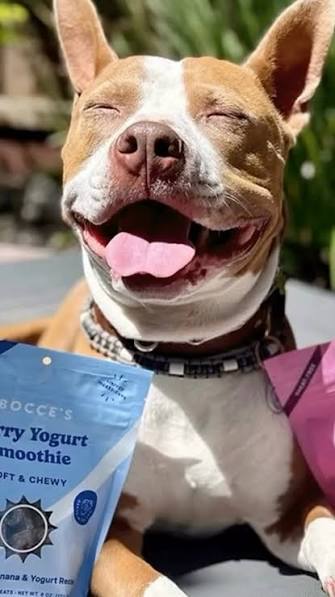
Power Pup Treats makes its treats from scratch using simple, limited ingredients and provides an up-front ingredient list for its products. The business also offers gluten-free options, local Rhode Island pickup or delivery arrangements, and locally available celebration cakes.
Shop Local RI lists Power Pup Treats in East Providence, Rhode Island, and describes its products as natural dog treats made with minimal ingredients.
A treat business fits naturally with this week’s dog treat impulse control topic because even a high-value reward works best when owners use it with clear rules. Your dog can enjoy something exciting without grabbing, jumping, or losing focus first.
Power Pup Treats is featured here as a local dog-related resource, not as a dog training provider. Off Leash K9 Training of Providence, RI remains the professional dog training resource in this article.
- Practice Around Increasingly Valuable Treats
Not every reward creates the same level of excitement.
A piece of regular kibble may be easy for your dog to ignore, while a favorite treat can make concentration much harder. That difference creates a useful training opportunity.
When practicing dog treat impulse control, begin with something your dog likes but can reasonably ignore. Once they are successful, gradually introduce more valuable rewards.
You can also practice:
- Waiting before taking food from your hand
- Sitting while treats are prepared
- Remaining on place while another dog receives a reward
- Walking past treats placed safely out of reach
- Holding a down command while food is nearby
Increasing difficulty gradually helps build dog confidence while preventing unnecessary frustration.
- Take Treat Manners Into Real Life
Eventually, dog treat impulse control should work beyond your kitchen.
Practice during walks, outdoor training sessions, visits with family, and other controlled environments. Your dog should learn that the same rules apply even when distractions change.
For example, ask your dog to sit calmly before receiving a reward during a walk. Practice “leave it” around safe distractions. Reward eye contact when your dog chooses you instead of fixating on something exciting.
At Off Leash K9 Training of Providence, RI, real-world reliability is an important part of professional dog training. Skills such as impulse control, obedience, dog confidence, and off-leash reliability are most valuable when they continue working outside the home.
For dogs who need a stronger obedience foundation, programs such as Basic & Advanced Obedience can help owners build clearer communication and dependable behaviors around everyday distractions.
Ready to Build Better Habits?
Good dog treat impulse control is about much more than preventing your dog from snatching a snack.
It teaches patience, focus, responsiveness, and the ability to think through excitement. Those skills can support everything from calmer walks and better household manners to broader behavior transformation.
If your dog becomes overly excited around food, struggles to listen around distractions, or needs a more reliable obedience foundation, Off Leash K9 Training of Providence, RI can help.
Contact Off Leash K9 Training of Providence, RI to learn more about training options for you and your dog.