
When I work with dogs and their owners, treats often become part of the conversation. Dog training treats can be incredibly useful for teaching new behaviors, improving focus, and helping dogs understand exactly which choices we want them to repeat. The important part is knowing how to use them correctly.
At Off Leash K9 Training of Providence, RI, I want owners to look at treats as one training tool, not the entire training plan. Good timing, consistency, clear expectations, and practice around real-world distractions are what turn a reward into lasting obedience.
Whether you are working on a simple sit at home or improving focus around busy Providence sidewalks, choosing and using rewards thoughtfully can make your training sessions more productive.
Why Dog Training Treats Work
Dogs learn through consequences. When a behavior leads to something valuable, the dog is more likely to repeat that behavior in the future.
That is where dog training treats can be helpful.
When your dog performs the behavior you asked for and receives a reward immediately afterward, the connection becomes clearer. Timing matters because waiting too long can leave your dog unsure about exactly what earned the reward.
The American Kennel Club explains that reward timing and placement can have a major impact on how clearly dogs understand what is being reinforced.
I recommend keeping a few basic principles in mind:
- Reward the correct behavior promptly.
- Keep training treats small and easy to eat.
- Match the value of the reward to the difficulty of the task.
- Practice in several different environments.
- Avoid showing the food before every command.
That last point matters. We do not want the treat itself to become the command.
Our guide to reinforcing training during a busy schedule also explains how short training repetitions can fit naturally into your everyday routine.
Choosing Dog Training Treats for Better Focus
Not every dog values the same reward, and not every situation requires the same level of motivation.
A familiar command inside your kitchen may only require a lower-value reward. The same command near people, dogs, traffic, or exciting smells may require something your dog finds much more interesting.
When selecting dog training treats, I prefer options that are:
- Small enough for repeated practice
- Quick for the dog to eat
- Easy to carry
- Appealing to that individual dog
- Appropriate for the dog’s dietary needs
Smaller treats are especially helpful because training often involves several repetitions. If the dog spends too much time chewing after every reward, the session can lose momentum.
Treats also should not become something your dog must see before responding. Once a dog understands a behavior, we can gradually change how frequently food rewards appear while still recognizing good decisions through praise, play, access to something enjoyable, or occasional treats.
That process is part of developing reliable obedience rather than creating a dog who only listens when food is visible.
For a broader look at maintaining skills throughout your dog’s life, our article on lifelong obedience training explains why training should continue as dogs grow and their environments change.
Regional Dog-Friendly Business Spotlight
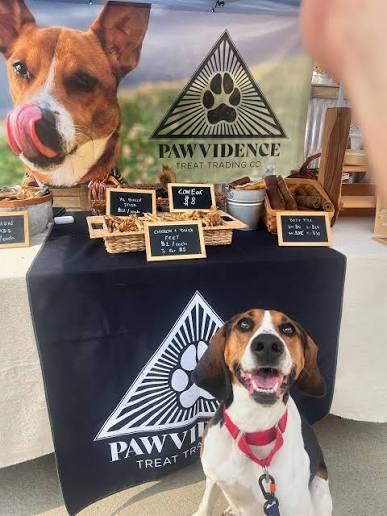
For this week’s local spotlight, I am featuring Pawvidence Treat Trading Co., a Rhode Island-based pet treat business with connections to the Providence community.

Pawvidence offers single-ingredient treats for cats and dogs and specifically describes some of its bagged treats as suitable for training or treating. The business has also participated in Providence-area markets and events.
That makes it a natural resource to highlight when discussing dog training treats.
Of course, the treat itself does not create obedience. What matters most is how the reward is used. A highly motivating treat paired with poor timing can still confuse a dog, while thoughtful reinforcement can make communication much clearer.
I also recommend checking ingredients carefully, especially if your dog has allergies, digestive sensitivities, weight concerns, or other dietary restrictions. Your veterinarian can help you determine what types of treats are appropriate for your individual dog.
Moving Beyond Treat-Dependent Training
One concern I hear from owners is, “Will I always need treats?”
The goal of professional dog training is not to have an owner constantly holding food. Instead, dog training treats can help us establish behaviors and reinforce good decisions while we build stronger communication.
For example, your dog may first learn a command in a quiet room with frequent rewards. As the behavior improves, we gradually add:
- More duration
- Greater distance
- New environments
- More distractions
- Less predictable rewards
That progression helps dogs understand that commands still matter even when the environment changes.
At Off Leash K9 Training of Providence, RI, we focus on developing practical obedience that owners can use in everyday situations. That can include leash manners, recalls, impulse control, place work, dog confidence, and eventually greater off-leash reliability when appropriate.
Our Dog Training Programs can provide additional structure for owners who want help moving from basic practice toward dependable real-world behavior.
Building Reliability That Lasts
The best dog training treats are not necessarily the most expensive or elaborate. They are rewards your dog values and that you can use effectively within a clear training plan.
Treats can help teach a puppy something new, reinforce better choices, improve focus around distractions, and make learning enjoyable. But they work best when combined with consistent expectations, clear communication, and regular obedience training.
At Off Leash K9 Training of Providence, RI, I want owners to build dogs who understand what is expected of them whether a treat is visible or not. That kind of behavior transformation takes practice, thoughtful reinforcement, and gradually increasing real-world challenges.
Ready to Build Better Training Habits?
If your dog performs beautifully when dog training treats are visible but suddenly loses focus when the rewards disappear, there may be a gap between knowing the command and reliably following it.
We can help you build clearer communication, stronger obedience, and more dependable behavior in the environments that matter most to you.
If you are in Providence or elsewhere in Rhode Island and want professional dog training support, contact Off Leash K9 Training of Providence, RI to learn how we can help you and your dog develop reliable skills for everyday life.