
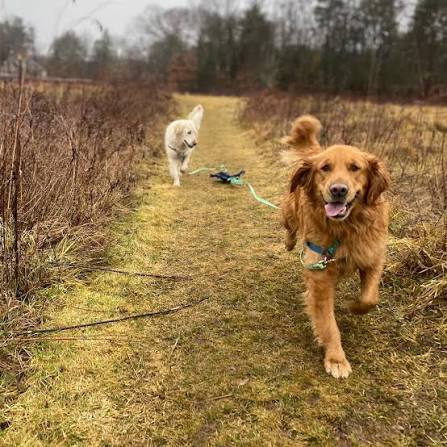
Dog settle training is one of those skills that can make everyday life noticeably easier. Whether your dog has had an exciting daycare day, spent time around other dogs, or simply gets wound up when the household is busy, learning how to calmly switch from activity to rest matters. For dog owners around Providence and across Rhode Island, I like to think of settling as an important part of building an adaptable dog.
At Off Leash K9 Training of Providence, RI, I often remind owners that a tired dog and a calm dog are not always the same thing. Exercise can help meet physical needs, but dogs also benefit from learning what to do when the excitement ends. That is where dog settle training becomes useful.
The goal is not to force your dog to lie still. Instead, I want to create a clear routine that teaches your dog that calm behavior has value too.
Start Dog Settle Training in a Quiet Environment
When I introduce dog settle training, I start somewhere familiar before expecting the behavior in a distracting environment.
A bed, mat, or designated place can give your dog a clear physical boundary. The American Kennel Club explains that teaching a dog to go to a designated place can be useful because a portable bed or mat allows the behavior to transfer to different environments.
Here is a simple progression I recommend:
- Choose a calm location. Start in a room without visitors, other pets moving around, or excessive noise.
- Guide your dog to the mat or bed. Reward them for stepping onto it.
- Ask for a down if they know it. Reward calm body language rather than constant movement.
- Build duration gradually. Start with several seconds before asking for longer periods.
- Use a release cue. A word such as “free” helps your dog understand when the exercise is finished.
With dog settle training, I would rather see several successful short repetitions than one long session where the dog becomes frustrated.
This type of structure also complements the everyday manners discussed in our Dog Manners in Providence guide. Obedience training is most useful when dogs understand how to behave during the quiet parts of daily life as well as the exciting ones.
Practice Calm Transitions After Exciting Activities
One of my favorite times to practice dog settle training is after a controlled activity.
Your dog might return from a walk, a play session, daycare, or another stimulating outing feeling physically tired but mentally activated. Instead of immediately allowing pacing, jumping, or demanding attention, create a predictable transition.
Give your dog a bathroom break, provide water, then guide them toward their normal resting area. Keep your own energy calm. Depending on the dog, a safe chew or another appropriate quiet activity may help reinforce the change of pace.
The important part is consistency.
For dogs that attend daycare, I also recommend reading our Dog Daycare Preparation in Providence guide. Daycare is not appropriate for every dog, and successful social experiences depend on factors such as temperament, comfort around other dogs, and the individual facility. The AKC likewise notes that owners should consider a dog’s personality and ability to handle a group environment when deciding whether daycare is appropriate.
Dog settle training gives owners something useful to practice regardless of where their dog’s exercise happens. The larger lesson is that excitement and relaxation should not feel like completely separate worlds.
Build the Skill Before Adding Bigger Distractions
Once your dog understands the exercise at home, begin making dog settle training slightly more challenging.
You might move the mat to another room, practice while someone walks through the house, or work near an open front door while maintaining safe control of your dog.
Only change one thing at a time.
If your dog repeatedly gets up, scans the environment, vocalizes, or cannot respond to familiar cues, the difficulty may have increased too quickly. Make the next repetition easier rather than repeatedly correcting the same mistake.
This progression helps build dog confidence while also supporting broader goals such as off-leash reliability and behavior transformation. A dog that can respond around distractions generally needs practice working through gradually more challenging environments, not an immediate jump from the living room to the busiest place you can find.
At Off Leash K9 Training of Providence, RI, professional dog training focuses on making obedience useful in everyday situations. Our Dog Training Programs include options such as Basic Obedience, Basic & Advanced Obedience, and Board and Train for owners looking for more structured help.
Regional Dog-Friendly Business Spotlight
This week, I’m highlighting Roo Dog, LLC in Providence, Rhode Island. Roo Dog provides local dog walking and pet-care services for Providence-area families and describes its team as bonded and insured.

A professional dog walker can be helpful for owners whose schedules make consistent daytime exercise difficult. Regular walks can give dogs an appropriate outlet for movement and exploration, but I also like owners to think about what happens when the walk is over.
That is where dog settle training connects naturally with this local resource. After exercise, practicing a predictable calm routine can help your dog learn that coming home means transitioning from activity to relaxation rather than immediately looking for the next source of excitement.
If someone else regularly walks your dog, I recommend sharing the cues and routines you use at home. Consistency with leash manners, waiting at doors, and calm greetings can make everyday expectations clearer for your dog.
Roo Dog, LLC is featured here as a local pet-care resource. Off Leash K9 Training of Providence, RI remains the professional dog training resource for the obedience, dog confidence, and behavior skills discussed throughout this article.
Ready to Build Better Everyday Habits?
Dog settle training may look simple, but calm behavior is a skill worth practicing intentionally. Start in an easy environment, keep sessions manageable, build duration gradually, and introduce distractions only when your dog is ready.
At Off Leash K9 Training of Providence, RI, we help Providence and Rhode Island owners turn obedience into skills they can actually use at home and out in the real world.
If your dog struggles to settle, loses focus around distractions, or needs a clearer obedience foundation, contact Off Leash K9 Training of Providence, RI to talk about the next step for your dog.